
The Cellular Revolution
Building Democracy from the Ground Up

I have spent the last few weeks dissecting why our current democratic systems are failing. The diagnosis is simple: they are too big. When 300 million people are asked to vote for a single individual to solve their problems, they aren’t participating in a government; they are participating in a lottery.
The human nervous system is not designed to process the abstract concerns of a continental-scale population. This mismatch is why we feel a growing sense of apathy. A sixty percent turnout for a presidential election is not a sign of laziness. It is a sign of mathematical literacy. People can sense that their individual agency has been diluted to the point of irrelevance.
If we want to save democracy, we have to stop trying to fix the roof while the foundation is rotting. We need to push power back down to the human level. We need a cellular revolution.
The Jeffersonian Blueprint
It is a recurring irony of American life that we ignore our best thinkers. Thomas Jefferson saw this trap coming centuries ago. He did not envision a monolithic state controlled by a distant capital. He proposed a system of “Ward Republics.”
Jefferson wanted to divide every county into small cells—wards small enough that every citizen could participate in the administration of their own local affairs. These wards were intended to be the “vital principle” of the republic. In Jefferson’s view, the only way to keep a citizen engaged was to give them something to actually do. When you govern your own neighborhood, you are a participant. When you only vote for a president, you are a spectator.
The Sinic Root: Family and Proximity
This idea is not uniquely Western. In the Sinic cultures of East Asia, community governance has roots that predate modern political theory by thousands of years. From the village structures of Vietnam to the lineage organizations of ancient China, the community was never an abstract collection of voters. It was a physical and biological reality.
The historical Vietnamese village, or “Lang,” operated as a state within a state. There was a common saying: “The King’s law stops at the village gate.” These communities were built on real-world relationships and shared physical space. Even as these systems have been modernized, that underlying cellular structure remains. It proves that the most effective social unit is one where people are bound to the neighbors they see every day, rather than the “communities” they choose online.
The Swiss Success and the Zapatista Lesson
We don’t have to look back into history to see this working. The Swiss model remains the most successful example of granular democracy in the modern world. With over two thousand autonomous communes, the Swiss handle their own urban planning, local taxation, and social services. The result is a level of trust in government that the rest of the West can only dream of.
In the mountains of Chiapas, the Zapatistas have built a similar “nested” system. Decisions are made at the local level and then carried up to regional councils by representatives who are strictly bound by the community’s will. It is a bottom-up flow of power that ensures the top level never becomes a runaway train.
Moving Toward a Human Scale
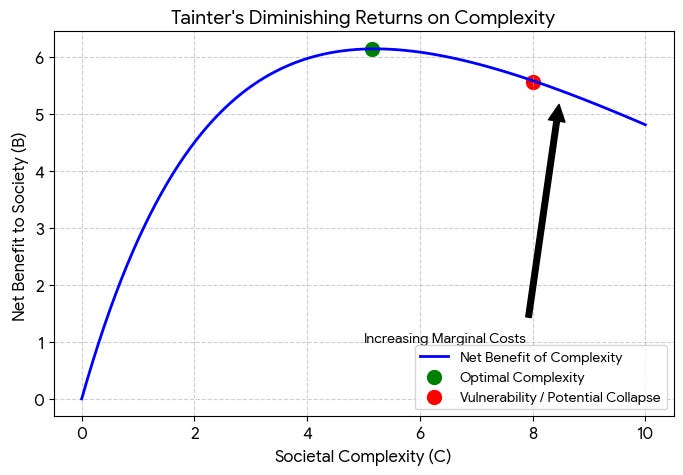
As we enter an era of energy scarcity and economic slimming, the massive, centralized bureaucracy will become a luxury we can no longer afford. The “Big State” is a high-energy phenomenon. When the wealth that fueled that centralization begins to dry up, we will have to look to one another again.
The hope for the future isn’t in a better candidate for president. The hope is in the meeting place down the street. We need to return to the physical world, to IRL relationships, and to the governing of our own human settlements. By fixing the local, we create a filter. We stop trying to fix the world by electing one “magical” guy at the top and start sending representatives upward from a foundation of real, functioning communities.
Evidence Log
To bolster the arguments made in this post, here are the key research points and sources provided in the deep research protocol:
The Ward Republic Theory: Jefferson’s letters to Joseph Cabell (1816) outline his vision for “partitioning” the republic into small units to prevent the rise of an elective despotism.
The Swiss Commune (Gemeinden): Switzerland’s high trust-in-government stats (60%+) are directly linked to the autonomy of its 2,131 municipal units.
Sinic Autonomy: Historical Vietnamese village charters (huong uoc) allowed communities to function as autonomous units with their own internal laws.
Nested Governance (MAREZ): The Zapatista system of “Good Government Juntas” provides a contemporary blueprint for how tiered, bottom-up representation can work in practice.
Complexity and Scale: Joseph Tainter’s work on the collapse of complex societies suggests that decentralization is often a necessary response to diminishing returns on centralized energy and wealth.